
Come on in!
There’s room for everyone in sustainability

Have you ever heard of creative archetypes? Like the Child, the Victim, the Seeker and the Warrior?
Well, I reckon sustainability has its own archetypes. This month, I’m sharing some of these to remind you that being an eco, climate or sustainability person doesn’t mean you have to be Greta Thunberg or join Extinction Rebellion. This space is vast. It works at every level of human society and on every facet of human psychology. And there is room – plenty of room – for you to join the movement and be a part of something world-changing.
Fair warning: I’m pulling these archetypes straight out of my head based on my experience with all the sustainability peeps I’ve bumped into. I’ve broken down my description of each archetype into 4 parts:
Who they are
What they are most likely to say
How they help
How they don’t help
This should give you the pros and cons of each archetype. All biases are mine. If you disagree with anything I say or want to add other archetypes, pop it in the comments or hit reply to this email
Ready? Let’s get into it.

11 archetypes of sustainability
After careful and thorough research – I brainstormed for 10 minutes – I’ve come up with 11 archetypes that almost everyone in sustainability fits into:
The tech optimist
The activist
The permie
The off-gridder
The eco urbanite
The carbon killer
The greenwasher
The scientist
The indigenous person
The artist
The old-timer
Like other archetype models, you may fit more than 1 archetype. This is good. If you can identify with multiple archetypes, you may have an ability to break the mould and reach across the divide – a trait we’re in sore need of in a world that must change direction.
1/ The tech optimist
Who are they: These are your entrepreneurs, investors, inventors, startuppers and scaleuppers. They recognise how dire the situation is, and want to put their smarts and connections to solving it. Tech optimists have an unshakeable belief in our ability to engineer our way out of environmental collapse.
Most likely to say: We’ll adapt.
How they help: There are techies making plastic bags out of algae and low-carbon concrete out of industrial waste. There are techies developing AI models that can predict future weather patterns and so tell us what crops will thrive where. Plastic reduction, circularity, food security? All in a day’s work for these brainboxes.
How they don’t help: Tech optimists may be very good at engineering solutions to problems. But in their rush to fix things, they sometimes forget to wonder how the things got broken in the first place.
2/ The activist
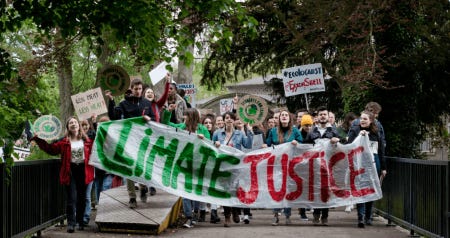
Who they are: These are the protesters, saboteurs and strikers. You may have seen them throwing soup at the Mona Lisa or gluing themselves to the road.
Most likely to say: Over my dead body!
How they help: Despite the rep, activists are generally a passionate, peaceful bunch who wouldn’t hurt a fly. And there’s no denying the power of good activism to raise the profile of a cause. Just look at the impact Greta has had.
How they don’t help: Activism draws negative publicity, with the media now labelling the entire movement the “eco-mob” and “eco-terrorists”. This proves that activists have billionaires rattled. But it also seems to be making us more enemies than friends.
3/ Permies
Who they are: A “permie” is a person who studies, practises or believes in permaculture. Permaculture is a design system that aims for maximum efficiency. It is most often applied to land and food systems, but it works equally well with retrofits, social impact, community projects, large organisations or any system that has inputs, outputs and stakeholders – all life, in other words.
Most likely to say: Did you think this through?
How they help: Permies tend to have an outsized positive effect in communities where they’re active. From food systems, retrofitting and flood/fire prevention to carbon storage, waste reduction and community resilience, permaculture designers bring practical, creative approaches to home and community building.
How they don’t help: In farming, for example, permaculture has been found to yield as high as conventional farming without any of the destructive practices that conventional farming implies. But permaculture techniques are light-years outside the comfort zone of conventional farmers. This is a barrier to uptake.
4/ The off-gridder
Who they are: They live deep in the woods, high in the mountains or at the farthest tip of the headland. They are tough and resourceful. And if you ever meet one – which is unlikely – you’ll be struck by their piercing gaze, hard muscles and wild hair.
Most likely to say: Have I shown you the power generator I built out of pallets, old bicycles and tree sap?
How they help: They do not emit a single gram of carbon or plastic. Not even a fart or a burp. They can survive any pandemic or civilisational implosion. In fact, they could easily be out there right now, inventing a totally new form of endless, clean energy à la Tony Stark.
How they don’t help: Some off-gridders want to disconnect from all society. Even people. So their knowledge only benefits themselves. You can try to befriend them and encourage them to share their knowledge with others. But you’ll have to get past the tripwires and booby traps first.
5/ The eco urbanite
Who they are: You’ll find them in organic supermarkets in cities, wearing cotton shirts and caring babies in slings. Their favoured mode of transport is a cargo bike full of kids singing about the 5 R’s.
Most likely to say: Is it vegan?
How they help: They’re the archetype least likely to own a car or eat meat. They only buy organic. They vote for the Greens. They’re bringing up kids to put people and the planet ahead of profit.
How they don’t help: Some eco urbanites don’t quite grasp the full implications of sustainable living. They may make a couch out of upcycled pallets, for example. But then they’ll go and buy a Tesla. This tendency to contradict themselves makes them an easy target for right-wing media looking to stoke people’s hatred.
6/ The carbon killers
Who they are: Experts, scientists, journalists and activists. Founders and funders. They do the calculations and tell the world – in straight, no-nonsense soundbites – what happens if we act and what happens if we don’t.
Most likely to say: Focus on the big stuff!
How they help: They’ve got the carbon data off pat and are unflappable when faced with sceptics, doubters and tricksters. This brings them attention and respect in the media and with the general public, which often opens doors to the halls of power.
How they don’t help: Their fixation on GHG emissions makes them lose sight of the underlying problem – our constant need for more.
7/ The greenwasher
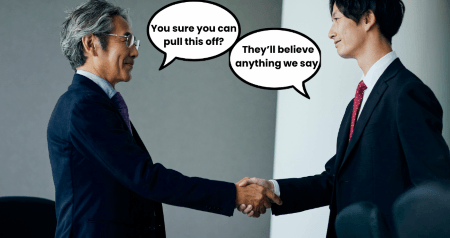
Who they are: The lobbies for oil & gas, big ag, mining, arms, aviation and tech/AI. And the ad and PR agencies who work with them.
Most likely to say: We’re only giving the market what it wants.
How they help: If I’m being really generous, you could argue that the fact they even talk about sustainability and climate change is helpful. At least it raises awareness. Other than that, they do nothing but harm.
How they don’t help: They trick consumers who want to do good into doing bad. And when the greenwashers get caught, they raise the suspicions of everyone who’d like to help but can’t figure out what to believe. Which breeds distrust. Which polluters amplify to discredit the entire movement.
8/ The scientist
Who they are: These are the people in labs, in universities, and in the field thinking, sampling, comparing, testing, measuring and giving us actual facts on how systems work and how they’re changing.
Most likely to say: I’ll show you my data if you show me yours.
How they help: Without their research, we’re just pissing in the dark hoping to hit the toilet bowl.
How they don’t help: If I must be critical, scientists can be overly cautious. But we need action now. Sometimes, I wish they’d go “Look, based on what we know right now, this is worth trying. But we’ll keep a close eye on it, and if it needs adjusting we’ll adjust it.” Take a stand. Take a risk, please! It’s okay to be wrong.
9/ The Indigenous person
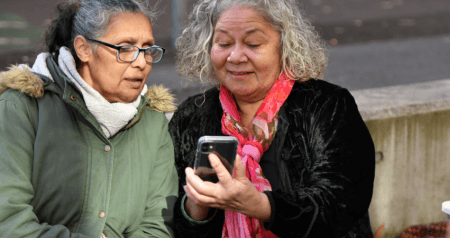
Who they are: Indigenous peoples, tribes, first peoples/nations and aboriginals are non-dominant ethnic groups that have a strong link to the land and to the resources of their territory and who can trace that link back to pre-secular/colonial times.Examples include the Lakota, Mayas, Aymaras, Inuit, Aleutians, Saami, Australian Aboriginal peoples, Torres Strait Islanders and Maori.
Most likely to say: Your way is not the only way.
How they help: Through their connection with their territories, they are uniquely placed to protect them as functioning, life-giving ecosystems. Also, their ways of being in society and in the world provide us with frameworks to heal and inspire our broken Western civilisation.
How they don’t help: Their ways can seem so alien to rich white Westerners that people roll their eyes or switch off. Which is damaging, as it’s these same rich white Westerners who hold power. Adapt the message to the listener. A lesson Indigenous peoples and permies need to learn if they don’t want to be dismissed as radicals.
10/ The artist
Who they are: When Guernica was bombed, Picasso painted. When AIDS became an epidemic, musicians gathered. When Palestinians were slaughtered, Banksy graffitied. When Kentucky was ravaged, Kingsolver wrote. And with biodiversity collapsing, Aurora is singing.
Most likely to say: Art is dialogue.
How they help: Art hits us on a very different level. It can make you dance or dream – or squirm. And by unplugging our minds from the boring practicalities of everyday life, art can help us tap into a hope or defiance that is rooted in a place far deeper than logic.
How they don’t help: Again, this isn’t the fault of artists, but many people refuse to engage with art because they think it’s highbrow nonsense. Or else they take it for pleasure and entertainment but are deaf to the message behind it.

11/ The old-timer
Who they are: These are your pre-Baby Boomers. You’ll see them digging their gardens in spring, selling surplus at farmer’s markets and tinkering with old tractors that have broken down for the 39th time. If you want to meet one, be quick. There aren’t many left.
Most likely to say: This isn’t a new idea.
How they help: When a Baby Boomer is scoffing at your talk of preserving ecosystems, the old-timer will point out, softly, that thrifty, careful management of resources and leaving the world better than you found it were exactly what their parents drummed into them when they were kids.
How they don’t help: Their knowledge of a world now lost is powerful. You want to lift them up on your shoulders and beg everyone to listen to what they have to say. But we can’t expect 90-year-olds to challenge the world. And nowadays, who would listen if they did?
Come on in, there’s room for everyone!
You may have noticed the friction between the archetypes. The permie doesn’t like the carbon killer’s obsession with emissions. The carbon killer dismisses the eco urbanite’s obsession with organic. The tech optimist dismisses the Indigenous person’s obsession with place and memory.
But despite our differences, remember that everyone in sustainability wants the same things: happiness, abundance, health, justice and stability. (Except the greenwashers. But then, who cares what they want.)
Disclosure: I identify with permies and artists. I have huge respect and trust for scientists and Indigenous people. I agree with carbon killers – to a point.
Now it’s your turn: which archetype(s) do you feel closest to?